
2026-08-23 · Jason Wagner
Why Does My Drain Keep Clogging? Common Causes and Solutions
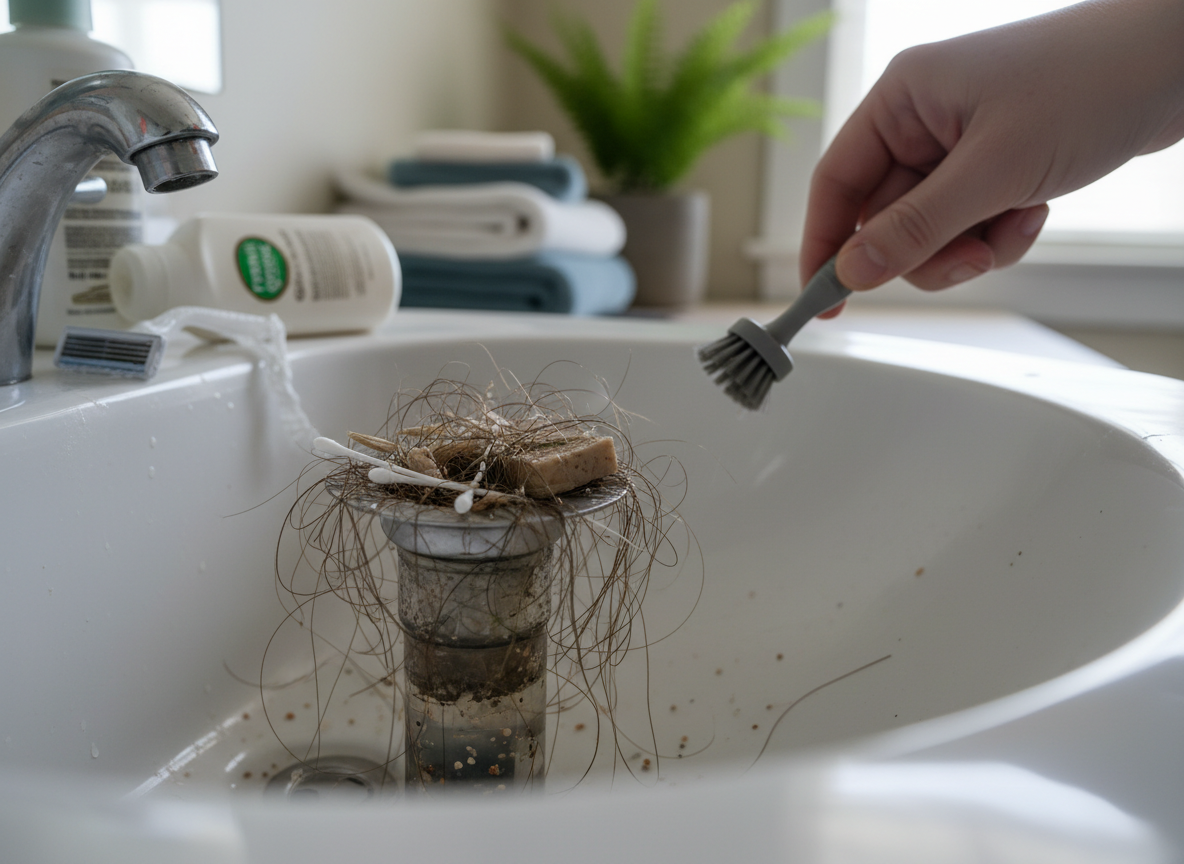
Recurring drain clogs in Fairhope homes usually come from a mix of daily habits and the area's older plumbing. In Baldwin County properties built before the 1980s, narrow cast-iron or clay lines collect debris faster when humid subtropical air keeps moisture high inside pipes. Tree roots from live oaks near the Fairhope Pier or Eastern Shore Art Center also invade joints during wet seasons. Addressing the source instead of repeated plunging prevents backups that reach the Fairhope Museum of History neighborhood streets.
Hair, Soap and Grease Buildup in Older Lines
Many Fairhope houses in Downtown Fairhope still have original 1.5-inch drain lines that narrow quickly. Hair from showers mixes with soap scum and creates a sticky mat that traps more material each week. In Fly Creek homes near the water, bay breezes carry extra humidity that keeps soap from fully drying, so buildup grows faster than in drier inland spots. Point Clear kitchens see the same issue from cooking grease that cools and hardens inside the pipe. A 25-foot cable run during a service call often clears the immediate stop, yet the restriction returns within weeks unless the line is opened wider. Homeowners notice slow tubs first, then gurgling at the lowest fixture. Regular hot-water flushes after each shower cut the rate, but they do not remove what already coats the pipe wall.
Tree Roots and Clay Pipe Failures Near the Bay
Baldwin County soil stays moist year-round, encouraging roots to seek water inside sewer lines. Live oaks and pines common around Point Clear and along Scenic 98 send roots through mortar joints in clay pipe every 8–12 years. Once a root hair enters, it expands and creates a net that catches toilet paper and wipes. During summer storms the extra groundwater pressure pushes more roots through the same cracks. A camera inspection from the cleanout at the street shows exactly where the intrusion sits before any digging begins. In Daphne and Foley neighborhoods with similar soil, crews see the same pattern on lines installed before 1975. Hydro jetting at 4,000 psi cuts the roots and scours the interior so flow returns to full capacity without replacing the entire run.
Seasonal Humidity and Pipe Corrosion Effects
Fairhope's humid subtropical climate keeps interior pipe walls damp even in winter. That constant moisture speeds corrosion on galvanized steel drains still found in many Fly Creek cottages. Rust flakes flake off and collect at elbows, forming dams that hold back water after every load of laundry. Bay breezes push salt air inland, and the salt accelerates rust on exposed threads under sinks. When temperatures swing 20 degrees between day and night, condensation drips inside vent stacks and carries lint downward. These small particles settle in the same low spots where grease already sits. A 30-minute video inspection through the roof vent reveals the corroded sections before they leak into crawl spaces. Replacing only the damaged 6–8 feet of pipe restores flow without disturbing finished walls.
Practical Steps and When to Call for Hydro Jetting
Start by using a zip tool or hair strainer at every drain and pouring a kettle of boiling water down kitchen lines once a week. Avoid chemical cleaners that can damage older Baldwin County pipes. If the clog returns inside a month, schedule a sewer video inspection to locate the exact restriction. For lines with heavy grease or root mats, hydro jetting clears 4-inch mains in one pass and leaves the interior smooth. Homes near the Fairhope Pier that back up after heavy rain usually need this step because storm water overloads the shared laterals. Follow the service with a maintenance schedule every 18–24 months to keep the line clear through the next humid season.