
2026-08-23 · Jason Wagner
Trenchless Sewer Repair vs Traditional Sewer Line Replacement
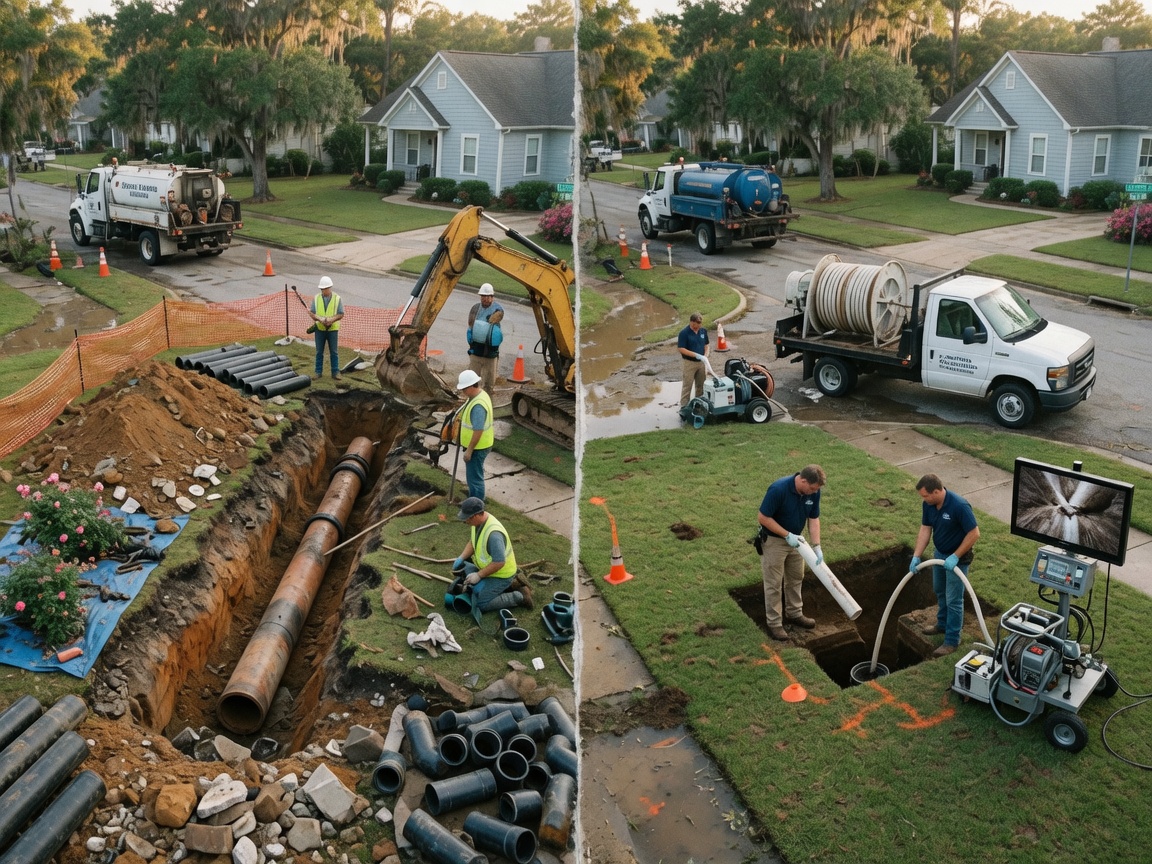
Trenchless sewer repair limits surface disruption compared to traditional methods when addressing pipe issues in older Fairhope properties. Homeowners in Downtown Fairhope and Point Clear often face root intrusion or corrosion in clay or cast iron lines installed decades ago. The choice depends on pipe condition, access points, and how much the surrounding soil has shifted due to repeated bay breezes and heavy seasonal rains.
How Trenchless Methods Work on Local Properties
Trenchless techniques such as pipe bursting or epoxy lining allow crews to access sewer lines through existing cleanouts or small entry pits rather than long trenches. In Fly Creek and nearby sections of Fairhope, this approach preserves mature landscaping and driveways common on older lots. Soil in Baldwin County tends to be sandy with pockets of clay that can expand after heavy rain, making full excavation riskier for foundation stability. A sewer video inspection often precedes the decision to confirm whether lining can restore flow without removal. Crews pull new pipe through the old line or coat the interior, finishing most jobs in one to two days once access is secured.
Traditional Replacement Steps and Local Challenges
Traditional sewer line replacement requires digging a trench along the pipe path from the home to the street connection or septic tie-in. In Point Clear and Downtown Fairhope, many homes sit on narrow lots where equipment must navigate tight spaces and underground utilities installed before modern codes. Baldwin County clay soils hold moisture longer in the humid subtropical climate, which can cause trench walls to slump during summer thunderstorms. Workers remove the failed pipe entirely, install new PVC or ABS material with proper slope, then backfill and compact the soil in layers. This method suits cases of complete collapse or severe offset joints that lining cannot correct.
Soil, Climate, and Terrain Factors in Baldwin County
Fairhope's proximity to Mobile Bay creates consistent breezes that dry surface soil quickly but leave deeper layers saturated after storms. These cycles contribute to pipe movement over time, especially in neighborhoods developed before 1980. Traditional digging exposes more of this variable ground, increasing the chance of additional repairs if adjacent lines shift. Trenchless options reduce that exposure yet still require stable entry points free of heavy root masses common near the Eastern Shore Art Center area. Homeowners along routes to Foley and Daphne notice similar patterns where seasonal humidity accelerates corrosion in metal piping.
Choosing the Right Approach for Your Line
A sewer video inspection reveals whether the line has isolated cracks suitable for lining or widespread failure that needs full removal. Properties in Fly Creek with limited yard access often benefit from trenchless to avoid hauling equipment across sensitive lawns. When offsets exceed two inches or multiple breaks appear along the run, traditional replacement provides a clean slate with new material rated for Baldwin County soil loads. Maintenance routines outlined in local plumbing guides help catch issues early regardless of method chosen. Both options restore proper drainage when matched to the actual pipe condition found on site.